
Making rehabilitation smarter, simpler, and more accessible
Our mission is to improve the way patients complete rehab at home by combining guided exercise, interactive technology, and remote progress tracking.
Our Features
What’s Our Speciality
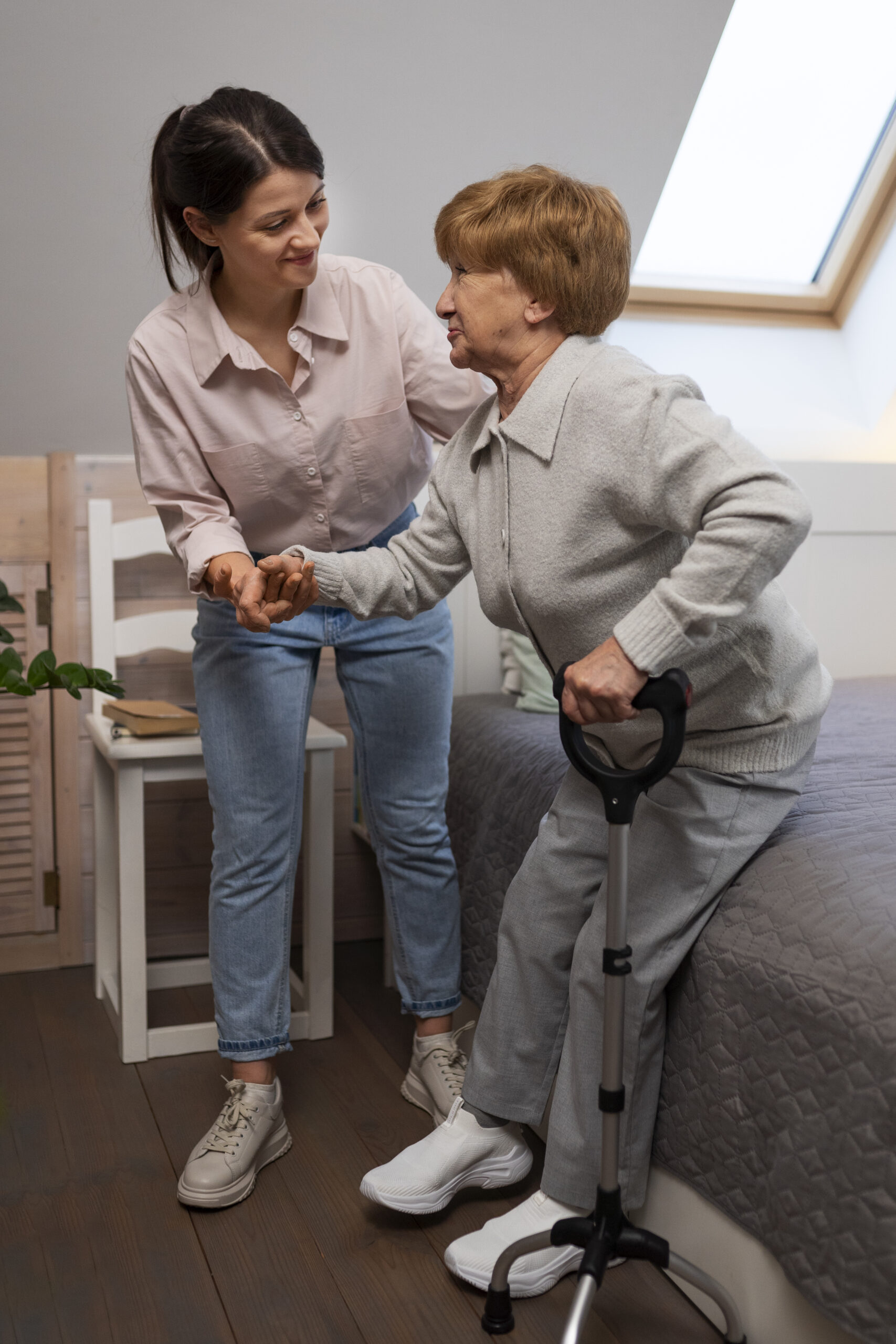
AI Rehab was created to improve the way patients complete rehabilitation at home. Traditional physiotherapy is often difficult to monitor once a patient leaves the clinic, leaving clinicians with limited visibility and patients with the challenge of staying motivated on their own.
Our platform bridges that gap by combining guided exercises, interactive games, and remote progress tracking into one connected rehabilitation experience.
By making home-based rehabilitation easier to follow and more engaging to complete, AI Rehab helps patients stay consistent while giving healthcare professionals clearer insight into their recovery journey.
Guided home rehabilitation
Helping patients complete structured exercises safely and consistently from home.
Patient engagement
Using interactive games to make rehabilitation more motivating and less repetitive.
Remote monitoring
Remote exercise review — allowing authorised healthcare professionals to review exercise participation and progress trends between appointments
Clinical visibility
Scalable care delivery
Supporting healthcare providers with a more efficient way to manage rehabilitation beyond the clinic.

40+ Years Of Experience
Our Mission
Our mission is to make rehabilitation more accessible, engaging, and trackable.
We believe patients should feel supported throughout their recovery, not just during appointments. By using smart technology and recording exercise participation and progress trends so healthcare professionals can review home exercise activity between appointments.
For healthcare providers, this means better visibility of patient progress. For patients, it means a more motivating and confidence-building recovery experience.
Leadership Team
Meet Our Expert Team and Advisory Board

Shameem Sampath MD FRCS
Founder and CEO
Visiting Professor Manchester Metropolitan
Oxford and Harvard trained
Over 2000 knee replacements

Mikail Aktas MD MRes (First Class) MRCS
Business Lead
Medical doctor
Imperial College
Professor Mohamed Medhat Gaber
PhD in AI (Monash University)
250+ AI publications with ~14,000 citations
Top 1% in AI and Image Processing (Stanford University/Elsevier)

Mark Ghee HPC , Grad Dip Phys, AACP
Chartered Physiotherapist with over 20 years experience

Szymon Manduk
MBA, MSc
Software Engineer
20+ years experience

Claire McGarvey
BSc
Neuroscientist
Fund raising and Investor Relations

Mark Seed
Patient advocate
Previous multiple knee injuries and surgery
Publications we feature in
Research notice: These publications report research studies and, in some cases, prototype or investigational analyses. Publication titles and study outcomes do not describe additional measuring functions of the currently marketed Slider device. Slider records heel displacement and calculates an estimated knee range-of-motion value for exercise feedback and progress tracking. It does not directly measure joint angle or muscle strength, diagnose complications or recommend treatment changes.
A Device for Prehabilitation of Total Knee Replacement Surgery (Slider): Usability Study
Islam R, Gooch D, Karlakki S, Price B
JMIR Form Res 2023;7:e48055
https://formative.jmir.org/2023/1/e48055
DOI: 10.2196/48055
QUIT: Quadriceps Inhibition Trends after Knee Arthroplasty, Sampath SACM, Aktas M, Presented at the 24th Annual Meeting of the International Society for Computer Assisted Orthopaedic Surgery (CAOS 2024).
Published in EPiC Series in Health Sciences, Vol. 7, pp. 197–201. DOI:
10.29007/ltm7 https://easychair.org/publications/paper/dPPg
Kinetic Pattern Recognition in Home-Based Knee Rehabilitation Using Machine Learning Clustering Methods on the Slider Digital Physiotherapy Device
Prospective Observational Study, Aktas M, Santoni N, JMIR Formative Research. March 18, 2025; 9:e69150. DOI: 10.2196/69150 | PMID: 40100262 | PMCID: PMC11962318
https://pubmed.ncbi.nlm.nih.gov/40100262
Comparison of Clinical Outcomes Between the Slider Device and Standard Physiotherapy for Knee Osteoarthritis Patients Undergoing Knee Replacement Surgery
A Pilot Study, McDonald S, Lim JW, Shanmugan K, Johnston AT, Bidwell JP,Podium Presentation at CAOS 2025, Davos, Switzerland., Affiliations: Norfolk & Norwich University Hospital; Woodend Hospital, NHS Grampian,